Podcast: Play in new window | Download
Subscribe: Apple Podcasts | RSS
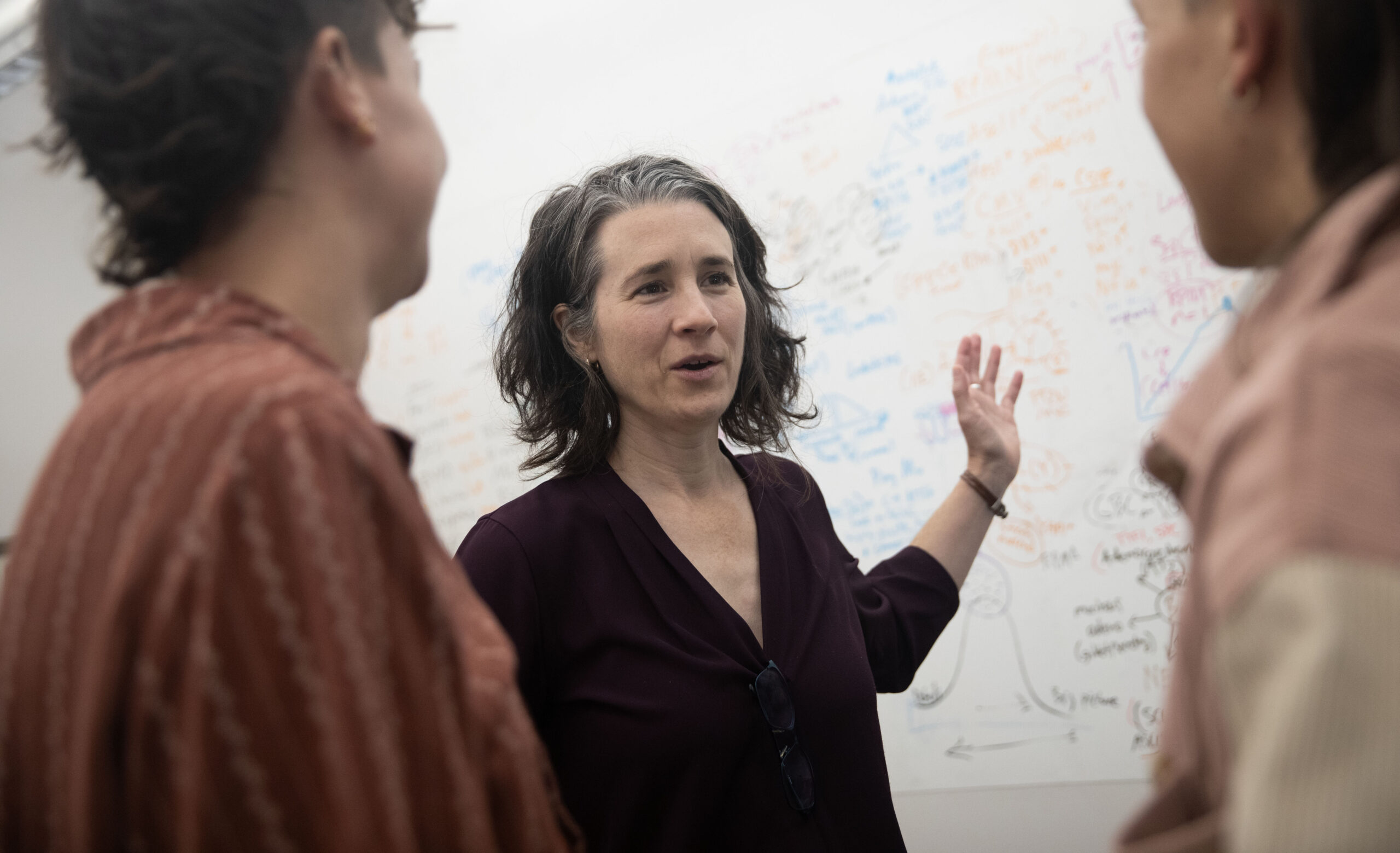 Dr. Trudy G. Oliver is a Professor in the Department of Pharmacology & Cancer Biology as well as a Duke Science and Technology Scholar at Duke University. She received her Bachelor’s degree in chemistry from Oklahoma Baptist University, and her PhD in cancer biology from Duke University. Afterwards, she conducted postdoctoral research at the University of North Carolina, Chapel Hill, and subsequently at MIT. Trudy served on the faculty at the University of Utah for more than a decade before joining the faculty at Duke University where she is today. She has received numerous awards and honors for her work, including the Heine H. Hansen Lectureship Award for Small Cell Lung Cancer from the IASLC World Lung Conference, the William C. Rippe Award for Distinguished Research in Lung Cancer from the Lung Cancer Research Foundation, the Lung Cancer Discovery Award from the American Lung Association, the American Cancer Society Research Scholar Award, the Damon Runyon-Rachleff Innovation Award, and the Jimmy V Scholar Award from the V Foundation for Cancer Research. In this interview, Trudy shares more about her life and science.
People Behind the Science Podcast Show Notes
Life Outside of Science (3:13)
When she’s not in the lab, Trudy unwinds with walks, jogs, music, and true-crime podcasts. She also enjoys spending quality time with friends, family, and her two energetic orange kittens named Basal and Tuft after her favorite lung cell types.
The Scientific Side (4:40)
Trudy’s research focuses on small cell lung cancer, a disease known for its remarkable ability to “shape-shift” or undergo cellular plasticity. This adaptability allows cancer cells to change types and develop different therapeutic vulnerabilities (or invulnerabilities), making treatment especially challenging and preventing the development of a one-size-fits-all approach.
A Dose of Motivation (5:43)
“We can sleep when we’re dead. Drink more coffee.”
“It’s just as difficult and expensive to answer an unimportant question as it is to answer an important question.”
What Got You Hooked on Science? (8:51)
Trudy’s childhood career aspirations included becoming a veterinarian, a heart doctor, or a circus clown. After riding a unicycle in her school circus, Trudy was able to check the circus off her list of career goals early and focus on her interests in science and medicine. Her parents weren’t familiar with what the career path looked like for a scientist or doctor, but they encouraged her to go to college. During college, two of Trudy’s family members were diagnosed with cancer. Seeing patients of all ages and demographics in the waiting room for chemotherapy during one of her great-grandmother’s treatment sessions had a profound impact. Cancer didn’t discriminate. Trudy decided she wanted to become an expert in the field. Excellent mentors helped guide her towards research opportunities and ultimately applying for PhD programs. When Trudy enrolled in graduate school, she didn’t really know what was in store. Despite a large learning curve and some early lab mishaps, Trudy was captivated by the power of controlled experiments to generate new scientific knowledge that could be reliably reproduced. This solidified her passion and set her on the path to becoming an academic researcher.
The Low Points: Failures and Challenges (20:57)
Right now is a particularly difficult time to get funding for scientific research. One of Trudy’s recent proposals was scored in the top 8% of submissions, and it will not be funded. This has forced her team to scramble to piece together alternative support, which is an added stress for a job that is already highly demanding. Trudy feels a deep sense of responsibility to support and mentor the nearly twenty people who work in her lab and rely on her as a leader. These individuals help to motivate her every day as does the exciting work they are doing together.
A Shining Success! (23:20)
A major milestone for Trudy’s lab was their first publication in Nature. This paper presents groundbreaking evidence that small cell lung cancer likely originates from basal stem cells in the lung, rather than neuroendocrine cells, as it was long believed. Motivated by inconsistencies in traditional neuroendocrine-based models, her team shifted to studying basal cells and found that introducing human-relevant mutations into these cells generated tumors that far more accurately reflected human disease. This insight reshapes how the field understands, models, and may eventually prevent small cell lung cancer. Their findings were further reinforced by independent machine-learning analyses of human tumors that came to the same conclusion.
Book Recommendations (27:31)
White Fragility: Why It’s So Hard for White People to Talk About Racism by Robin DiAngelo, The New Jim Crow: Mass Incarceration in the Age of Colorblindness by Michelle Alexander, Radical Candor by Kim Malone Scott, The Obstacle Is the Way: The Timeless Art of Turning Trials into Triumph by Ryan Holiday
Most Treasured Travel (28:32)
Travel opportunities are one of Trudy’s favorite parts about being a scientist, and she’s been to many wonderful places around the world as part of her job. One particularly memorable trip brought her to Barcelona where she enjoyed incredible food, world-class cocktail bars, breathtaking views from Park Güell, and a visit to the Gaudí-designed Palau Güell. Visiting a collaborator at the University of Essen in Germany was also a stand-out experience, and she’ll never forget the wide variety of remarkable breads she sampled while there. A third trip worth mentioning was to Banff, Canada, where she attended a small conference in a castle-like lodge. There, she experienced a dramatic weather shift that transformed a nearby hiking trail from autumn terrain to a snowy landscape, complete with icicles and moose. Each of these locations left lasting impressions with their natural beauty and culture.
Quirky Traditions and Funny Memories (31:38)
During her time as a postdoc in Dr. Tyler Jacks’ lab at MIT, they had an annual tradition where they split into themed teams, wore costumes, and spent the day completing elaborate city-wide adventures across Boston. These events combined scavenger hunts, pub crawls, and homemade “Olympic” competitions with sack races and water balloon battles. This was a fun and unforgettable way to get the group together outside of the lab. While Trudy’s current lab hasn’t developed anything quite as elaborate, they’ve built their own meaningful tradition: a birthday celebration featuring a “gratitude circle.” Whenever it is a lab member’s birthday, they form a circle, and each person shares something they admire or appreciate about that lab member. This has become a wonderful, uplifting, and inclusive way to recognize everyone in the lab.
Advice For Us All (36:45)
When someone says something, it’s about them and what’s going on in their lives. It’s not about you, and it’s important not to take it personally. Also, make sure to take time to celebrate your successes.
Guest Bio
Trudy is a cancer biologist whose research explores how cancers evolve and shapeshift, allowing them to adapt and resist treatment. Her lab uses sophisticated mouse and organoid models to uncover how small cell lung cancers (SCLCs) emerge, change identity, and evade therapy. By studying these dynamic transitions, her team aims to find new ways to stop aggressive cancers in their tracks and improve outcomes for patients. Outside of the lab, Trudy loves spending time outdoors—especially hiking and mountain biking. She lives with two lively orange cats named Basal and Tuft (a nod to her favorite lung cell types), who keep her company during late-night data analyses. When she’s not on a trail or in the lab, she’s usually drinking coffee, listening to crime podcasts, or hanging out with friends and loved ones.
Support for this episode of People Behind the Science was provided by Innovative Research, Inc.
Leave a Reply