Podcast: Play in new window | Download
Subscribe: Apple Podcasts | RSS
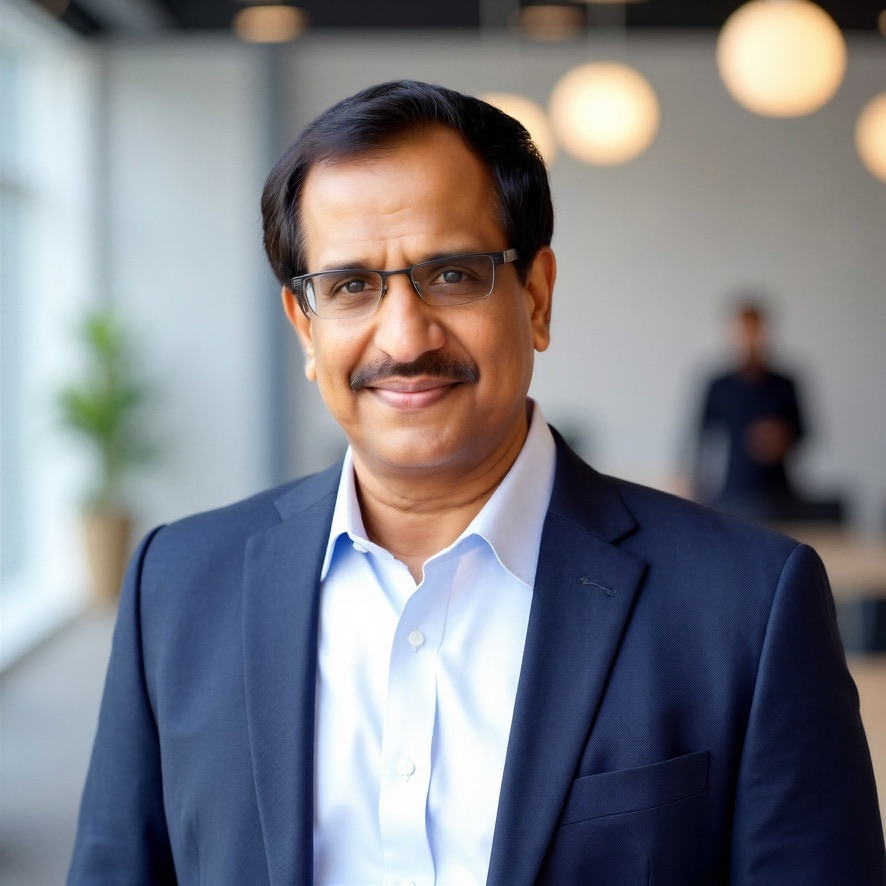 Dr. Ashok K. Shetty is a University Distinguished Professor in the Department of Cell Biology and Genetics and Associate Director of the Institute for Regenerative Medicine at Texas A&M University, Naresh Vashisht College of Medicine. Ash earned his Ph.D. in Neuroscience from the All India Institute of Medical Sciences in New Delhi, and he completed postdoctoral research at Montana State University and Duke University. Afterward, he joined the faculty at Duke University in the Division of Neurosurgery. He joined the faculty at Texas A&M University College of Medicine in 2011. In 2024, he was honored with the University Distinguished Professor Award from Texas A&M University, and he has also received the College of Medicine’s Senior Research Excellence Award. In addition, Ash is a Fellow of the American Association for the Advancement of Science and the American Society for Neural Transplantation and Repair. He has received the Research Career Scientist Award from the United States Department of Veterans Affairs, has been recognized among the “World’s Top 1% of Scientists” across all scientific fields, and he was the 2025 honoree of Fast Company’s World Changing Ideas. In this interview, Ash shares details about his life and his work in science.
People Behind the Science Podcast Show Notes
Life Outside of Science (3:17)
Science takes up a lot of Ash’s time, but when he’s able to get a moment to himself, he enjoys spending time with family, cycling on a stationary bicycle, playing brain games like Sudoku, and going out to see movies at the theater.
The Scientific Side (4:44)
Ash is developing treatments for neurological and neurodegenerative disorders using stem cells and stem cell-derived products, such as extracellular vesicles. These are tiny vesicles secreted by stem cells that carry microRNAs and proteins. Once they make their way into the brain, they can induce beneficial changes in neural cells to improve brain function.
A Dose of Motivation (6:02)
“Opportunity is missed by most people because it is dressed in overalls and looks like work.” — Thomas Edison
“Believe you can and you are halfway there.” — Roosevelt
“The people who are crazy enough to think they can change the world, are the ones who do.” — Steve Jobs
What Got You Hooked on Science? (9:01)
Growing up in a small rural town in southern India, Ash never imagined a career in research. Inspired by his dad’s career as a schoolteacher, he aimed to become a college lecturer. After earning a master’s degree in medical sciences and beginning as a lecturer in human anatomy, Ash’s fascination with neuroanatomy and the mysteries of the brain sparked his passion for neuroscience. He soaked up knowledge from all the textbooks and turned next to reading original research articles in the library. Ash’s curiosity continued to grow, and he decided to pursue a PhD. His early research focused on cell therapies using dopamine-producing cells.
Ash went abroad to the U.S. to continue his training as a postdoc, and his research branched out into brain development. Missing his earlier research on cell therapies, Ash moved to Duke University where he studied the use of neural cell transplants for repair after brain injury. He added neural stem cells to his research when they became more prevalent in the field, and he continues to use stem cells, as well as stem cell-derived neural cells and extracellular vesicles, in his work today.
The Low Points: Failures and Challenges (23:15)
When he was starting his research lab, Ash got his first big NIH R01 research grant on the very first submission. While Ash’s colleagues joked about his beginner’s luck, he was thrilled to get to work on his experiments. However, Ash was so focused on the work for his current proposal that he wasn’t thinking about the next steps for his research. So, when it was time to renew his grant, Ash didn’t have enough preliminary data to support his new ideas. His renewal application was rejected without reviewers even discussing it. Ash was devastated.
With his funding running out, Ash could no longer support the postdoc and technician in his lab. Suddenly, the lab was just him. This was a difficult period for Ash, but with his remaining funding from a grant from the Department of Veterans Affairs, he did some new experiments, gathered preliminary data, and submitted three different R01 proposals over a period of 18 months. In the end, Ash got two R01 grants funded at nearly the same time, and he has been successful in keeping his research well-funded ever since.
A Shining Success! (25:56)
Recently, Ash was notified that one of his lab’s original research articles published in 2023 received the highest number of citations during the two year period after it was published, and it was selected to win the 2026 Brain, Behavior, and Immunity Impact Award. This award will be presented at the 2026 PsychoNeuroImmunology Research Society Annual Meeting in New Orleans. The paper received more than 100 citations within the first two years after publication. Though Ash and his team knew it was a very good paper with innovative data, they didn’t anticipate it would become so popular. The recognition was a nice surprise, and they are looking forward to celebrating after the award is presented.
Book Recommendations (27:50)
Principles of Neural Science by Eric Kandel
Most Treasured Travel (29:01)
One of Ash’s favorite scientific conference trips was to Crete, Greece. There, he loved the beautiful scenery, the remarkable beaches, and the fantastic Mediterranean food and wine. Since Crete is a relatively small island, you can see much of it within a day or two of exploration. Another memorable trip brought Ash to Taormina in Sicily, Italy. The Italian food and wine were delicious. Taormina is also a beautiful place with wonderful beaches and great sightseeing opportunities. At both meetings, Ash had a chance to share his research, get feedback from peers, see new places, and experience different cultures. Ash had great conversations with fellow scientists, and the conferences also had built-in time for attendees to get outside and enjoy the local sites.
Quirky Traditions and Funny Memories (31:51)
In one of the previous labs where Ash worked, they had a publication ritual for each new paper. When his first paper was accepted, his advisor announced the publication and took Ash and the other co-authors out to a local bar. They discussed his progress towards his next paper over beer, and this was the first time that Ash had experienced something like this. In his own lab, they celebrate new publications by going out to lunch or dinner, and they have a monthly lab happy hour to bring everyone together to bond outside of work.
Advice For Us All (35:50)
Research sometimes generates unexpected results. Don’t stress about the outcomes of your experiments. Focus on the process. When you get the results, do your best to interpret whatever you see. Also, read a lot within your field, because ideas come from reading. Follow your curiosity, and choose a research topic you truly care about, rather than picking something just because it is popular.
Guest Bio
Ash’s research is dedicated to developing therapies that slow brain aging and combat Alzheimer’s disease by reducing brain inflammation. A recent study in his lab found that intranasally administered stem cell-derived vesicles in middle age reprogram microglia, the brain’s immune cells, resulting in reduced neuroinflammation and improved cognition later in life. This approach could potentially delay memory decline and prevent Alzheimer’s if applied at the right time in humans. Earlier, Ash’s team demonstrated that these vesicles can calm overactive microglia and astrocytes, slowing cognitive decline and preventing mood disturbances in a model of early-onset Alzheimer’s disease. Additionally, the lab showed that these vesicles protect human neurons from amyloid beta-42, a toxic protein linked to synaptic and neuronal loss in Alzheimer’s disease. Looking ahead, the lab plans to expand its research to include models of late-onset Alzheimer’s, the most common form of the disease, and to test the efficacy of stem cell-derived extracellular vesicles when administered in the middle and advanced stages of the disease. These ongoing studies are designed to determine whether this promising treatment can benefit patients even after the disease has progressed, ultimately aiming to improve quality of life for those at risk or affected by Alzheimer’s disease. Outside of work, Ash is committed to maintaining both mental and physical well-being. He enjoys challenging his mind with brain games like Sudoku and Quartiles and keeps physically active through light weightlifting and biking. Ash also has a passion for travel, both nationally and internationally, and actively participates in scientific conferences.
Support for this episode of People Behind the Science was provided by Innovative Research, Inc.
Leave a Reply