Podcast: Play in new window | Download
Subscribe: Apple Podcasts | RSS
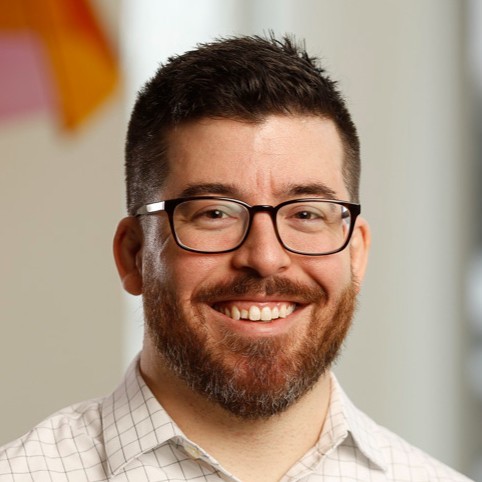 Dr. Isaac Harris is an Associate Professor in the Department of Biochemistry and Biomolecular Sciences and the Center for Discovery in Cancer Research at McMaster University. He received his bachelor’s of engineering degree in chemical engineering and PhD in molecular biology from the University of Toronto. Next, he conducted postdoctoral research at Harvard medical school before joining the faculty at the University of Rochester and Wilmot Cancer Institute in 2019. In 2024, he was awarded the Wilmot Community Outreach and Engagement (COE) Innovator Award. He very recently moved his lab and joined the faculty McMaster University. In this interview, Isaac shares more about his life and research.
People Behind the Science Podcast Show Notes
Life Outside of Science (2:16)
When he’s not working, Isaac enjoys spending time with his wife and five-year-old daughter, doing things like coloring, playing outside, visiting the park, or eating ice cream. He also likes cooking, reading, relaxing, watching TV, and introducing his daughter to some of his favorite childhood shows like The Simpsons.
The Scientific Side (4:22)
Isaac’s research examines the roles of antioxidants in health and disease, including how they are produced and used in cells. He is particularly interested in how cancer cells rely on antioxidant pathways to survive and grow. Isaac is working to understand why high-dose antioxidant supplements may sometimes promote cancer rather than prevent it, and whether blocking cancer cells’ natural antioxidant systems could slow tumor growth.
A Dose of Motivation (9:32)
“Everybody wants to be a bodybuilder, but nobody wants to lift no heavy-a** weights.” — Ronnie Coleman
“I must not fear. Fear is the mind-killer. Fear is the little-death that brings total obliteration. I will face my fear. I will permit it to pass over me and through me. And when it has gone past I will turn the inner eye to see its path. Where the fear has gone there will be nothing. Only I will remain.” ― Frank Herbert, Dune
“I wish upon you ample doses of pain and suffering,” because through pain and suffering there is growth and learning. — Jensen Huang, CEO of Nvidia
What Got You Hooked on Science? (16:19)
Isaac’s early enthusiasm for science was sparked by childhood “rock hunting” trips, gazing through the lens of his small microscope, at-home experiments, and time spent exploring the natural world with his father. Labor-intensive summer jobs later taught him persistence and got him used to the kinds of mundane, repetitive tasks that often underlie scientific discovery. Initially planning to become a physician, but wanting a backup plan in case he didn’t get into medical school, Isaac began studying chemical engineering in college.
However, he soon realized that biomedical research offered an opportunity to combine problem-solving, investigations into questions no one had answered before, and the potential to have positive impacts on a lot of people’s lives through scientific discovery. Through persistence, excellent mentorship from his PhD and postdoc advisors, and a willingness to create his own opportunities, Isaac achieved his goal of leading his own independent research laboratory.
The Low Points: Failures and Challenges (34:22)
Scientific research often takes a long time, and you don’t necessarily get the results you expect. For example, after investing years of work studying a particular enzyme that supported antioxidants using a genetically engineered mouse model, their experiments showed no differences. To get through these kinds of setbacks, Isaac has tried to learn from negative results, maintain a short memory for failure, and continue to pursue meaningful questions.
Another challenge in his particular field of antioxidants is finding a niche and convincing people that there are still important gaps to address. Although Isaac has faced rejected grants and criticism that these questions have already been answered, he believes there is tremendous value in revisiting established ideas with new tools, perspectives, and experimental approaches.
A Shining Success! (36:58)
Mentoring students and trainees has become one of the most rewarding parts of his career. Isaac’s first graduate student joined his newly established laboratory during the COVID-19 pandemic, and it was exciting to see her grow into an increasingly confident, independent scientist. She successfully defended her PhD, published a paper in the prestigious journal Nature Communications, and went on to land a position at Roche.
Isaac has also worked to support early-career scientists beyond his own laboratory. Together with Dr. Gina DeNicola, he co-founded the free, virtual Cancer Metabolism Showcase and Workshop, which highlights research by students, postdoctoral fellows, and technicians while offering practical training in networking, science communication, career planning, and transitioning into academic or industry positions.
Book Recommendations (3:35)
The Dark Tower Series by Stephen King, The Fisherman by John Langan, and books by Christopher Buehlman.
Most Treasured Travel (42:24)
One of Isaac’s most memorable travel experiences came as a graduate student attending a conference in Capri, Italy. After the conference, he and a postdoc colleague enjoyed staying in Italy for a bit to explore. Beyond introducing him to new places, cultures, and researchers, the trip revealed how academic science can create opportunities to build lasting relationships and become part of an international research community.
Although being surrounded by prominent scientists initially felt intimidating, the experience taught him that it is okay to enter unfamiliar spaces, listen, and learn. Over time, Isaac has become more comfortable with discomfort and encourages trainees to manage feelings of imposter syndrome, keep showing up, and take small steps toward meeting people who may enrich their lives and careers.
Quirky Traditions and Funny Memories (46:15)
During his postdoctoral training in Boston, Isaac and several fellow cancer metabolism researchers began meeting regularly at a local bar to discuss science, challenge one another’s ideas, and spend time together. What started as an informal monthly gathering grew into a lasting community of colleagues who have supported each other as their careers developed. Though they now work in different places, the friendships and scientific connections formed during those years remain strong.
Advice For Us All (51:06)
Research isn’t easy. Knowing this has helped Isaac persist through the failures, repetitive work, unexpected results, and rejection that are inherent to science, while remaining motivated by the possibility of making discoveries that could have a lasting impact. As you go through your life, face challenges directly, keep moving forward, and build strong networks of mentors and colleagues. Science can be an unpredictable, up-and-down pursuit, but with perseverance and support, researchers have the extraordinary opportunity to uncover new knowledge that may ultimately improve people’s lives.
Guest Bio
Born in Ottawa, Canada, Isaac is looking forward to moving his lab to its new home at McMaster University. His research focuses on the antioxidants and the roles they may play in health and disease. There has been a long-standing belief that antioxidants supplements could prevent or treat cancer. However, results of large-scale clinical trials have shown the opposite: antioxidant supplements promote, rather than prevent, cancer. Antioxidants are known to be depleted in some diseases and overabundant in other diseases, and we don’t yet have the ability to regulate antioxidants to either prevent or treat disease. The Harris Lab focuses on uncovering how antioxidants are made, how they are used, and how modulating them can improve disease outcomes.
Leave a Reply