Podcast: Play in new window | Download
Subscribe: Apple Podcasts | RSS
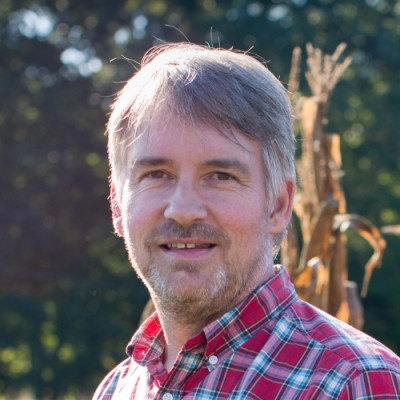 Dr. Dave Jackson is Professor of Plant Genetics at Cold Spring Harbor Laboratory. He obtained his bachelor’s degree in biotechnology from the University of Leeds and was awarded his PhD from the John Innes Institute. Afterwards, Dave conducted research as a NATO and USDA Postdoctoral Fellow at the Plant Gene Expression Center in Berkeley, CA, before joining the faculty at Cold Spring Harbor Laboratory in 1997. He was elected as a Fellow of the American Association for the Advancement of Science (AAAS) in 2018. In our interview, Dave shares more about his life and science.
People Behind the Science Podcast Show Notes
Life Outside of Science (2:07)
Outside the lab, Dave works to keep a healthy balance by getting outdoors to go hiking, backpacking, and camping. He also dedicates time to art and music, which are abundant in New York City. Dave loves supporting emerging artists and musicians, particularly bio-art and jazz music. Artistic creativity is a lot like the creative process in science. He’s especially excited by how artists can translate scientific ideas into forms that feel more accessible and inviting to the public.
The Scientific Side (3:33)
Dave is driven to understand what makes plants grow and why various types of plants look different from each other. His research examines how genes control plant shapes, including investigations into the role of genetics and stem cells. The long-term goal is to turn this foundational knowledge into tools that can improve agriculture.
A Dose of Motivation (4:39)
“Fortune favors the brave.”
What Got You Hooked on Science? (8:00)
In the north of England where Dave grew up, the Industrial Revolution has a lasting legacy. His dad was an engineer who fixed machines at the local factories and tinkered in a workshop at home. Making and breaking things in the workshop alongside his dad sparked Dave’s early fascination with how things work. This desire to understand how things work by taking them apart merged with the acceleration of new developments in biotechnology that were occurring around the same time.
As he learned about new biotech companies forming, Dave began to dream about a career in biotech. He went to college at the University of Leeds because it had one of the UK’s earliest undergraduate biotech degrees. However, Dave’s plans changed shortly after beginning work in a lab on his own independent research project. Pursuing his own research projects and having his own lab sounded like a better fit, so he pivoted to an academic research path. Dave was drawn to plant genetics because it provided opportunities to spend time out in nature with the plants during field work in addition to doing exciting research in the lab. He ultimately found a wonderful, collaborative community in the field of maize genetics.
The Low Points: Failures and Challenges (16:06)
In science, it’s important to stay positive through the many challenges involving rejected papers, unfunded grants, and the uncertainty in research support. An exciting project in Dave’s lab was rejected for funding three times, despite positive reception by the reviewers. Despite these setbacks, they kept trying to work on the project with funding from other sources to keep pushing it forward. The project involved a gene that controls maize development and how the plant responds to heat stress, which is a major issue in agriculture. Studying this gene led to the unexpected discovery that it may help the plant balance growth with how they respond to heat or drought stress. To bounce back after a challenge or failure, Dave spends time with family and also to talk through challenges with others both within and outside of science.
A Shining Success! (19:06)
Seeing the successes of his trainees is really rewarding for Dave. For example, one of his graduate students was selected for a “best poster” award at a conference this past summer. This underscored the excellent science the student is doing, and it was fun to see the student engaging with other scientists at the conference.
In terms of research successes, Dave and his team have been working on a project investigating how genes interact in plants. If a gene is inactivated or disrupted, you may not see an effect on the growth of the plant because genes may have backup copies called “paralogs” that can fill in. Using CRISPR, Dave’s team created a complete deletion of one gene, so it is no longer in the genome and can’t make RNA. They’re eager to see how the paralog gene responds and whether the response in plants is similar to or different from what has been reported in animal models.
Book Recommendations (22:10)
A Feeling for the Organism: The Life and Work of Barbara McClintock by Evelyn Fox Keller
Most Treasured Travel (26:41)
Japan has been one of Dave’s favorite travel destinations. When Dave’s postdoc advisor was invited to present at a conference there but was unable to attend, Dave had the opportunity to fill in. There, he discovered a vibrant scientific community, rich culture, and stunning countryside. Over two weeks, Dave visited different labs and explored Tokyo, Kyoto, Nara, and Nagoya. He met researchers who have become lifelong colleagues and friends. This was Dave’s first international conference, and the vast majority of the presentations were in Japanese. Even though he couldn’t understand the presenters, Dave was still able to ask insightful questions based off of the graphs and figures. David returned to Japan this past summer for a conference and after the meeting ended, he and some friends went to the Northern Alps. The excellent public transportation made it easy to get around, and they enjoyed hiking and exploring the outdoors.
Quirky Traditions and Funny Memories (25:06)
Dave’s lab has a tradition of going ice skating in New York City around the holidays. It’s a chance to step away from work, enjoy some laughs, and see labmates try something new. While Dave isn’t an expert skater, he has gotten better over the years and falls less than most of his team.
Advice For Us All (32:21)
Don’t be afraid to try things. Often, you won’t know if you like something or if something will work unless you try it. Also, we’re at a major inflection point in biology. There are incredible new technologies, and we’re facing some critical, large-scale challenges. There are great opportunities to make really big discoveries that can substantially improve people’s lives. So, now is a great time to enter biology, and you should consider reaching out to colleagues and professors to learn more.
Guest Bio
Dave’s research is focused on understanding the growth and development of plant form. He combines cell biology and genetic approaches in model systems maize and arabidopsis. Dave’s recent work has expanded into single cell sequencing and spatial transcriptomics to identify factors that control plant stem cells. His group also studies how plant cells communicate, by exchanging informational molecules—transcription factors and mRNAs—through plasmodesmata, as well as identifying genes that control stem cell identity, branching and plant regeneration. His group’s work has suggested ways to improve crop yields through subtle manipulations in stem cell pathways. Dave is also passionate about science education, and he directs a high school research program at CSHL, as well as mentoring non-scientists in a community Biolab, Genspace in Brooklyn, NY, where he is also developing collaborations with bioartists. Outside of the lab, Dave enjoys hiking, travel, art, and live jazz concerts by emerging local artists. He lives with his wife, an accomplished designer, son, and 2 cats in Brooklyn, NY.
Leave a Reply