Podcast: Play in new window | Download
Subscribe: Apple Podcasts | RSS
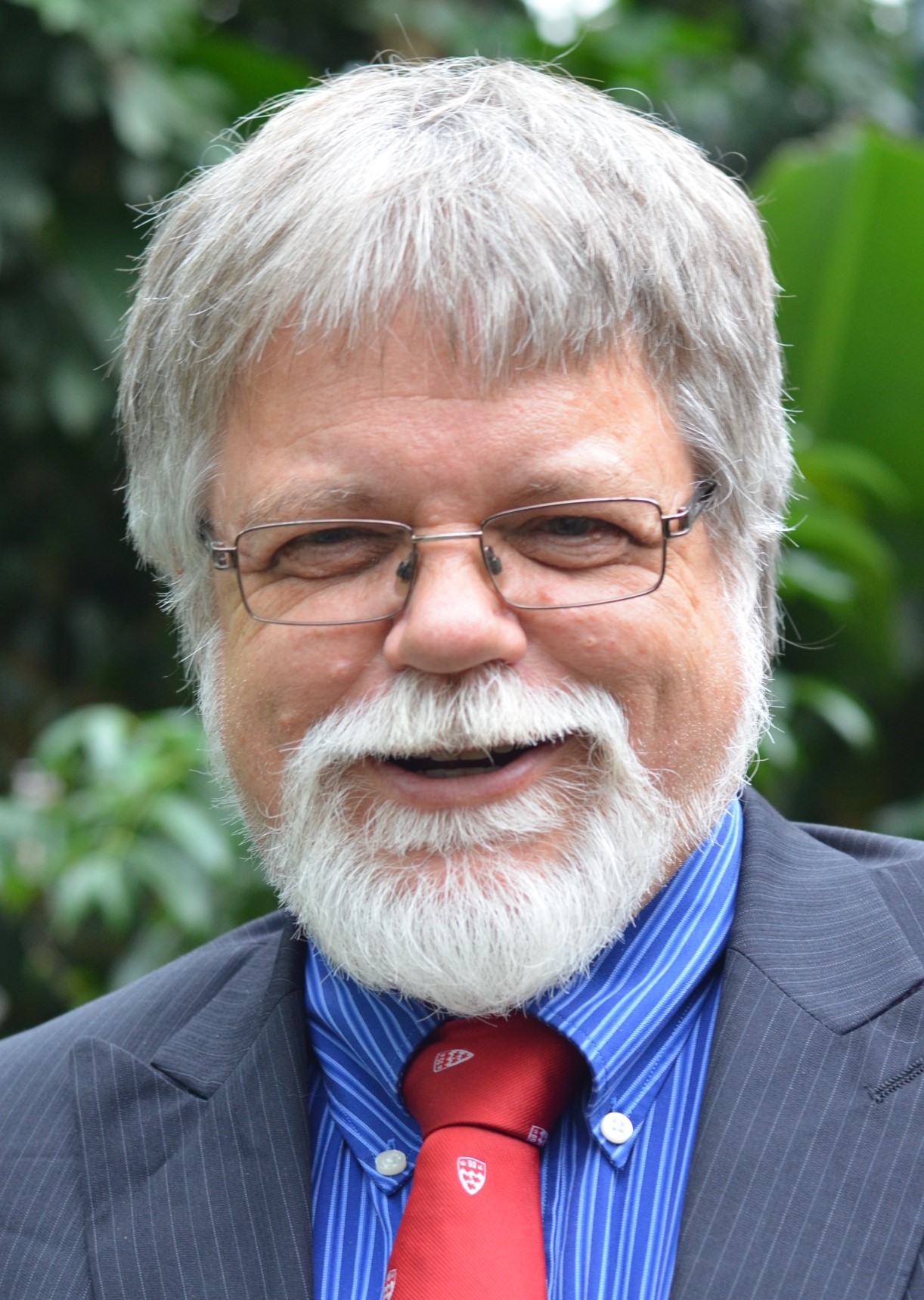 Dr. Donald L. Smith is the Distinguished James McGill Professor in the Department of Plant Science at McGill University. He is also CEO of BioFuelNet Canada, Head of Biomass Canada, and Head of the McGill Network for Innovation on Biofuels and Bioproduct. He received his Bachelor’s and Master’s degrees from Acadia University and his PhD from the University of Guelph. Afterwards, he worked as an Natural Sciences and Engineering Research Council of Canada (NSERC) Postdoctoral Fellow at Agriculture Canada before joining the faculty at McGill University in 1985. Over the course of his career, Don has received many awards and honors, including, the Clean50 award for contributions to sustainable development and clean capitalism in Canada and the Queen Elizabeth II Diamond Jubilee Medal, in this case for significant contributions to intelligent agriculture . He is also a Fellow of the Canadian Society of Agronomy, and he served as a Member of the Canada-US think tank on climate change and agriculture in North Eastern North America. In our interview, Don shares more about his life and science.
People Behind the Science Podcast Show Notes
Life Outside of Science (3:20)
Outside of the lab, Don loves to unwind and recharge by going on walks and reading great novels. He is also an avid traveler who enjoys blending work with trips to new places whenever possible, turning conferences and collaborations into opportunities to explore the world.
The Scientific Side (4:40)
Don’s research examines relationships between plants and the microbes that live in association with them, particularly in the roots. He and his collaborators have discovered evidence of signaling between plants and microbes, including microbial signaling that causes plants to grow better. They also uncovered that plants respond much more strongly to signals in the presence of drought or cold stress. Now they are expanding their investigations to examine a wide range of plant-associated microbes to better understand the signals they send and how they may impact plant health and resilience.
A Dose of Motivation (11:58)
Evolution never sleeps. If there’s some problem that’s presented, evolution will try to find a way around it. It doesn’t care about any human rules on what can and can’t be done. It’s whatever works.
What Got You Hooked on Science? (13:53)
Growing up on a rural apple farm in Nova Scotia, Don was always intrigued by plants, biology, and how the natural world works. However, the long days of physical work didn’t leave much time to imagine a future in science. After a rocky first year of university, a summer job doing repetitive, backbreaking work in a fertilizer factory became a turning point. Don realized he didn’t want to do this forever. He returned to school with renewed focus, and his grades reflected his new-found resolve. Don’s longtime interest in plants steered him towards studying biology and getting involved in research.
As the first in his family to attend university, Don never expected to pursue graduate school, let alone a PhD or a career as a professor. But a mix of curiosity, travel, and well-timed mentors helped him chart his path. During a summer scuba diving for Natural Resources Canada off of Prince Edward Island, Don stumbled across a book about Australia. He decided to go. After an interesting year abroad working in a steel mill in Australia and then traveling through Southeast Asia and Europe, he returned home ready to give graduate school a try. This led to a master’s degree, followed by a PhD. Along the way, Don learned to keep his eyes open for opportunities and seize them when they arose, ultimately leading him to a productive and rewarding career in academic research.
The Low Points: Failures and Challenges (26:47)
Don did some groundbreaking research on soybeans, identifying a new way to leverage signaling processes between the soybean plants and their associated bacteria to enhance growth so they can produce beans in the shorter growing season in Canada. In particular, they identified lipo-chitooligosaccharides (LCOs) were critical signaling molecules from bacteria that help start the nitrogen fixation symbiosis in plant roots.
However, their results with LCO treatments were inconsistent, both in the field and in the lab. Sometimes they saw a strong growth response, but sometimes nothing happened. They kept trying different things, but nothing seemed to explain the variability in their results. The breakthrough came on a cold, wet spring day doing field work in a cornfield. Don began to wonder if temperature was important. Indeed, it was. Soil temperature plays a critical role in the establishment of the plant-microbe interactions within the first twelve hours, particularly the interactions relevant for nitrogen fixation. And it wasn’t just temperature, other stresses like limited water could also strengthen the effect of their LCO treatments. These discoveries have had major impacts on agriculture.
A Shining Success! (28:54)
Don has also done important work in biocontrol, tackling Clavibacter michiganensis michiganensis (CMM), a major tomato pathogen. By isolating a set of beneficial bacteria that strongly suppressed the disease, he and his team discovered that one bacterial strain released a compound that either stopped CMM from growing or actively harmed it. With a talented student leading the charge and help from chemist collaborators, they isolated and identified the structure of two related compounds involved. Getting to this point was a long process though. One of the compounds has a side chain with an extra methyl group, and they still haven’t figured out its orientation. After three years of working on the project, Don decided to move on and publish what they had, and this was an exciting success.
Book Recommendations (3:39)
Gravity’s Rainbow by Thomas Pynchon
Most Treasured Travel (30:47)
Travel has played a major role in Don’s life. Visiting Southeast Asia, especially Indonesia and Malaysia, were particularly impactful because it was his first time experiencing a non-Western culture. It was eye-opening and awe-inspiring. The remarkable biodiversity of the Galápagos Islands and the dramatic geology of Iceland also left lasting impressions on Don. In addition, as part of his field work, Don had the opportunity to travel to a stunning oasis in the Sahara Desert in Egypt and to experience the rich culture of Nigeria.
Quirky Traditions and Funny Memories (34:04)
Life in the lab can get intense, so Don makes a point of organizing events to get everyone together throughout the year to connect, decompress, and temporarily escape the pressures of lab life. These events have led to some memorable moments, including a late-autumn walk to the pier near McGill’s campus to watch comets streak across the sky.
With trainees from all over the world, lab members have also had to adapt to the new climate and culture in Montreal where the winters are long, cold, and snowy. One student from Kenya was delighted to witness her first snowfall there, but she also struggled to wrap her head around the prospects of temperatures dropping down to about -40°C, which is twice as cold as the deep freezer in the lab. Being cooped up indoors when it’s cold and daylight is scarce can take a toll though, and Don encourages his lab members to get outside for a brisk walk whenever possible.
Advice For Us All (40:01)
When you get a result that doesn’t conform to what you expect, don’t just brush it off. You need to look at it hard and you need to make sure it’s repeatable. But if it is, it could be more interesting than what you thought would happen. Be persistent. Things don’t always work out as you expect in science or in life more broadly. Many things will pop up, and you just have to persist to get through them.
Guest Bio
During his 40 years at McGill, Don has conducted research in the production and physiology of crop plants, with an emphasis on plant-microbe interactions, related to both food production and biofuel feedstock production. Specific areas of research have been: nitrogen metabolism, nitrogen fixation, low temperature stress and legume nodulation, methods for injection of metabolites into plants, cereal production, plant growth regulators, intercropping, inter-plant competition, plant-microbe signaling, plants and climate change, biofuel crops, cannabis, crop stress responses, and biochar as a soil amendment. Work on microbe-to-plant signals and plant stress responses is leading to climate change resilient crop production systems. He has trained 86 graduate students, ~2/3 at the Ph.D. level, published >410 papers, generated fourteen patents, started a spin-off company (Bios Agriculture Inc.), and commercialized technologies now applied to ~100 million hectares of cropland per year. These technologies are based on microbe-to-plant signals, particularly in the area of crop plant stress mitigation; his laboratory has been a pioneering group in this work. He has been cited more than 26,000 times and his current H index (Research Gate) is 81. He has been principal investigator on research grants totaling ~$100 million. He currently leads BioFuelNet, which recently finished a 5-year cycle of funding ($50M), which led to an additional $12M to fund the Biomass Canada research cluster through AAFC.
Support for this episode of People Behind the Science was provided by Innovative Research, Inc.
Leave a Reply