Podcast: Play in new window | Download
Subscribe: Apple Podcasts | RSS
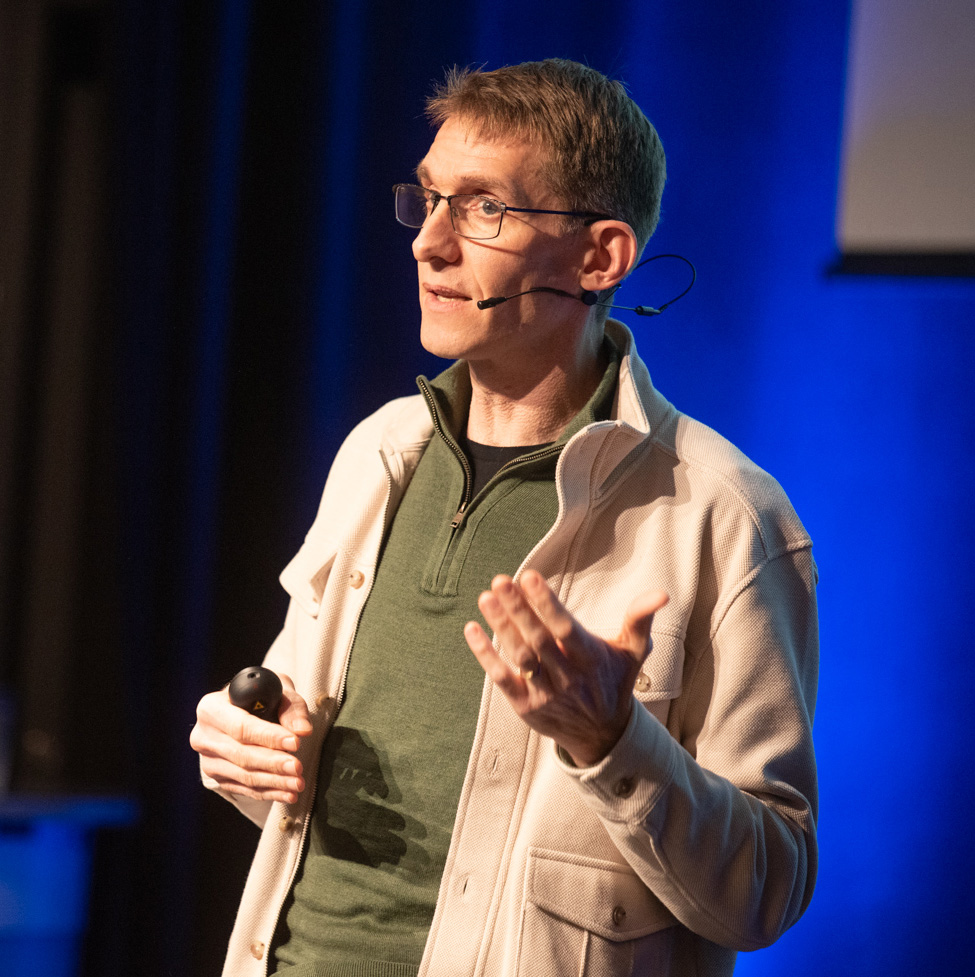
Dr. Alan Cohen is Associate Professor of Environmental Health Sciences, Chair of Biological Complexity and Healthy Longevity, and Co-Director of the Science of Health Program in the Robert N. Butler Columbia Aging Center at Columbia University. He received his Bachelor of Science degree in Biology and Asian Studies from the University of Michigan, Ann Arbor, and he was awarded his PhD in Biology from the University of Missouri-St. Louis. Afterwards, Alan completed postdoctoral research at Johns Hopkins University, the University of Toronto, and the University of Sherbrooke. He then served on the faculty at the University of Sherbrooke for about 12 years before accepting a position at Columbia University in 2022. Alan has received various awards and honors, including the Canadian Institutes of Health Research (CIHR) Institute of Aging New Investigator Prize of Excellence in Research on Aging and the CIHR New Investigator Salary Award. In this interview, he shares more about his life and science.
People Behind the Science Podcast Show Notes
Life Outside of Science (3:04)
When he’s not working, Alan enjoys practicing Aikido, a martial art he first learned while living in Japan. He also does contact improvisation dance, where partners use spontaneous points of physical contact to create movement together without knowing where the dance will lead.
The Scientific Side (4:48)
In his research, Alan takes a theoretical biology approach to some of the biggest questions in science, including what aging is and what it means to be alive. Rather than viewing biology only as a collection of individual genes, molecules, and cells, he studies how these components interact as complex dynamic systems to maintain the internal balance that supports health. His work explores how the breakdown of these interconnected systems may underlie aging and disease, and how scientists can develop new ways to measure and understand these changes beyond traditional reductionist approaches.
A Dose of Motivation (7:46)
John von Neumann once told Claude Shannon, the inventor of information theory, that he should call his measure of uncertainty “entropy,” because “nobody knows what entropy really is, so in a debate you will always have the advantage.” This humorous anecdote about entropy continues to resonate with Alan and inspire him in his work about aging.
What Got You Hooked on Science? (11:18)
In his early school days, Alan enjoyed his science classes, but he wasn’t drawn to the rigid notion of the scientific method. He studied poetry for a few years in an art high school and began college as an Asian studies major. When he realized that Asian studies majors tended to get jobs in marketing or other kinds of positions that didn’t appeal to him, Alan knew he had to make a change. He chose to study ecology so he could spend time outside, surrounded by nature and animals. After graduating, Alan pursued a PhD on the evolution of aging and later shifted his research towards public health. The freedom to pursue his own research questions motivated Alan to stay in academic science, and he honed his research program as a new faculty member to focus on complex systems theory.
The Low Points: Failures and Challenges (26:11)
One of the biggest challenges Alan faced in his career was getting other scientists to pay attention to his ideas that were outside the mainstream at the time. Early on, he published work applying complex systems theory to aging. Although Alan was able to publish his research, he often felt that the work was simply being ignored rather than debated or criticized. Over time, as systems biology and ideas about interconnectedness became more widely accepted, the scientific community became increasingly receptive to concepts he had been advocating for years. This experience taught Alan the importance of patience and persistence in science. Sometimes you just have to wait for the field to catch up.
A Shining Success! (29:26)
A recent win was finally securing a substantial federal research grant. This involved several years of adapting to the U.S. funding system and trying to find support for ideas that may push traditional boundaries. While having the funds to do the projects Alan proposed is exciting, the real success was the freedom this grant has given him. With less time and energy devoted to worrying about grants, he has been able to return to the conceptual thinking he loves, including developing ideas about entropy and aging, sharing articles through a Substack publication, and working with collaborators to advance how we think about aging.
Book Recommendations (36:23)
Seven Decades: How We Evolved to Live Longer by Michael D. Gurven, Bewilderment by Richard Powers.
Most Treasured Travel (39:38)
Working in ecology gave Alan the opportunity to conduct field research in some remarkable places, including Panama. While studying birds in the town of Gamboa, Alan experienced a series of surprising small-world encounters as he crossed paths with old friends and acquaintances. Those unexpected reunions, combined with early mornings in the jungle sampling birds, made the trip especially memorable. Alan also appreciated the simplicity of life at the field station. Having fewer conveniences and gadgets reminded Alan that many of the things we consider “essential” don’t necessarily make us happier.
Quirky Traditions and Funny Memories (43:21)
Alan has fond memories of the amazing community he was part of as a graduate student in Saint Louis. His PhD program brought together a diverse group of students from around the world with different backgrounds, experiences, and traditions. One tradition that has stayed with him came from his PhD advisor, who celebrated each graduating student with a signed bottle of champagne. Alan and other former lab members have continued this tradition with their own students. Beyond the lab, the international community made for lively gatherings filled with salsa music, caipirinha cocktails, and lasting friendships.
Advice For Us All (47:00)
The best advice Alan has received is to follow your passion and remain patient when pursuing ideas you truly believe in. Passion provides the motivation to keep going when good ideas take time to gain traction. Pursuing something you feel is important may also bring your body and mind into a healthy alignment. At the same time, it’s important to understand how the scientific system works, including funding, publishing, and networking, without allowing career pressures to dictate everything you do. Learn how to navigate the system while staying focused on the questions and ideas that excite you most.
Guest Bio
Alan is interested in understanding the biological basis of health and aging, particularly how our bodies maintain dynamic equilibrium, and how evolution has shaped networks of biological and physiological mechanisms that keep us in balance across changing conditions. This understanding can lead to metrics of health and aging that are more integrative than standard molecule-by-molecule approaches, and that can serve as a basis for understanding health, aging, and longevity across individuals, populations, and species. Alan relies largely on epidemiological data (or similar data in other species) to understand how networks of biomarkers change over time, and how dynamic processes (such as in data from wearables or responses to stressors) relate to the biological basis of health, “intrinsic health.”
Support for this episode of People Behind the Science was provided by Innovative Research, Inc.
Leave a Reply